
Was the Civil War Fought Over Slavery? What Ordinary Soldiers Believed
Life, loyalty, and memory on the Missouri-Kansas border, 1855–1864
There is a question that refuses to die whenever the American Civil War comes up.
Was the Civil War fought over slavery?
The political answer is yes. Slavery sat at the center of the crisis that tore the country apart, and the men writing the secession documents were not shy about saying it. Mississippi declared that its position was “thoroughly identified with the institution of slavery.” South Carolina complained that Northern states were refusing to honor constitutional obligations involving escaped slaves. The Confederate Constitution protected slave property and slavery in Confederate territories.
What interests me more is why so many American families spent the next century saying their grandfather or great-grandfather did not fight for slavery.
Sometimes that claim was dishonest. The Lost Cause did a fine job sanding slavery out of secession and replacing it with a cleaner story.
But that does not explain every family story.
Grandpa might have been telling the truth about why he fought.
The mistake came later, when one man’s reason for picking up a rifle became an explanation for why eleven states left the Union.
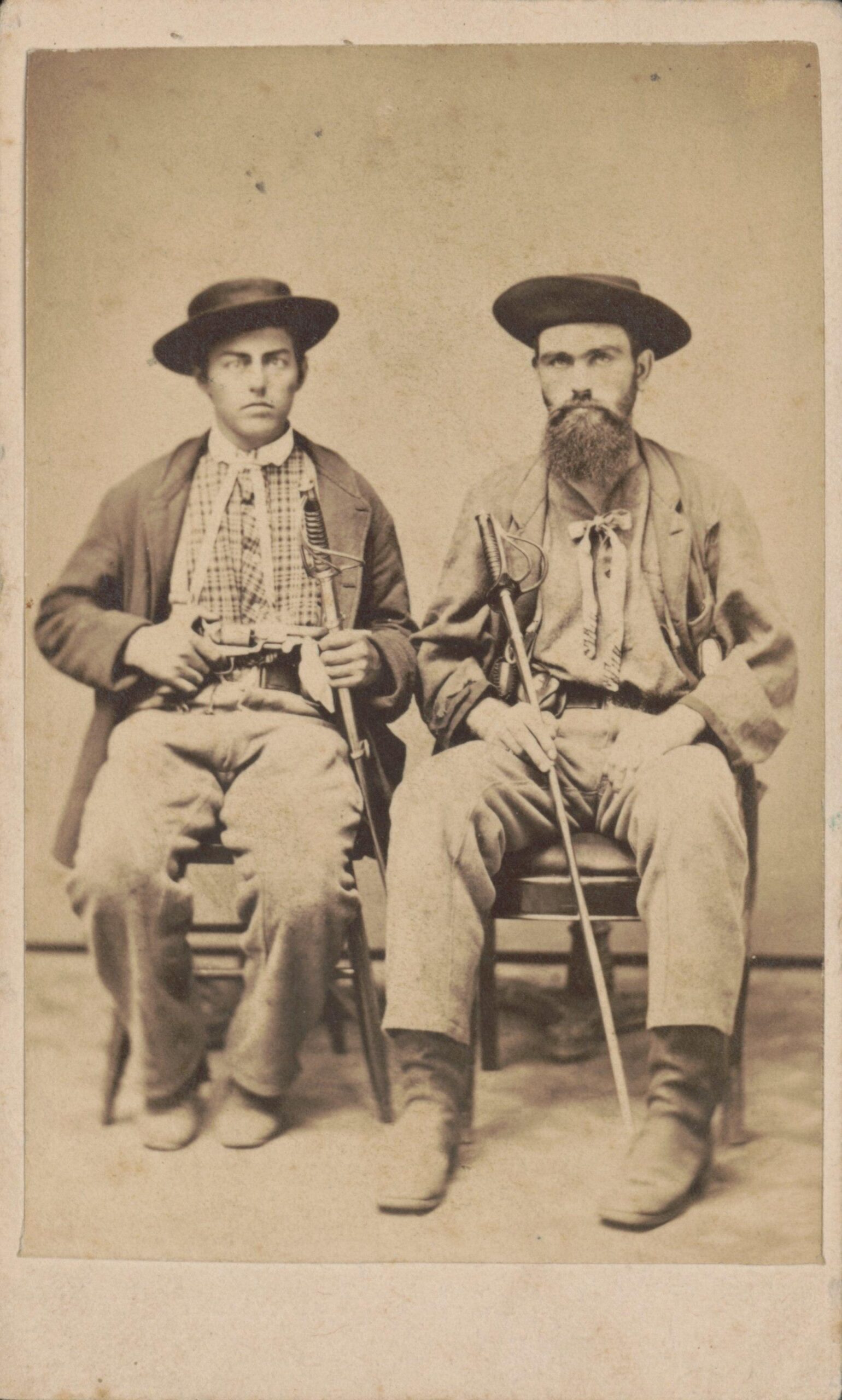
To understand that difference, we need to get away from presidents, generals, senators, and marble statues for a while.
Just some poor bastard trying to get his corn planted.
Political Violence Gets Personal Fast
There is a useful piece of modern research that helps here.
In 1966, Andrew R. Molnar and other researchers working for the U.S. Army produced Human Factors Considerations of Undergrounds in Insurgencies. The study examined how political movements recruit people, how grievances spread, and how violence against civilians can harden people who were never especially political to begin with.
One point matters here: abstract politics becomes something else when somebody believes innocent people have been hurt.
A dead civilian is easier to understand than constitutional law.
And the cogwheels upstairs haven’t changed much.
Daily Life on the Missouri-Kansas Border
Imagine two families living fifty miles apart in 1856. One is in western Missouri. The other is in Kansas Territory.
Neither owns slaves.
Most mornings look about the same.
A busted wagon wheel can matter more on Tuesday afternoon than whatever happened in Washington.
Schooling existed, but frontier life did not always cooperate with a school calendar. Farm work came first when it had to. Plenty of education happened through newspapers, family, church, books, and whatever else made its way west.
Samuel James Reader gives us a good look at that world.
Reader came to Kansas in 1855 at nineteen. Cheap land drew him there. He later wrote that the Free-State question had been secondary when he arrived.
He farmed. He chopped wood. He read constantly. He hurt himself with an axe. He worried about crops and weather. His diaries put politics beside the ordinary junk that fills a life because that is how people actually live.
One day a man is thinking about slavery.
The next he’s trying to keep the hogs from getting loose.
Bleeding Kansas Was Also an Information War
We tend to imagine people in the past receiving history directly. They didn’t. They received somebody’s version of it.
Reader read newspapers and exchanged letters with people who disagreed with him.
Across the border, Missourians had their own newspapers and their own stories about what was happening in Kansas. They heard about abolitionists coming west, armed Free-State settlers, stolen property, and violence creeping toward Missouri.
Kansas settlers heard something else. Armed Missourians were crossing the border, interfering in elections and intimidating Free-State communities.
Neither side needed to invent the whole thing.
Missourians really did interfere in Kansas elections. Pro-slavery men attacked Free-State settlements.
Free-State fighters and later Jayhawkers also crossed into Missouri. Homes burned there too.
That is how politics quits being something happening somewhere else.
A neighbor dies and suddenly the argument has a face.
An empty house, a funeral.
An offering bowl passed around church for the widow.
Samuel Reader Changed His Mind
Reader’s story gets more interesting because he told us what he used to believe.
Before Kansas, he said there was “no class of men I despised or hated more” than abolitionists. He had been taught that way of thinking by his uncle.
Then he lived through Kansas. After experiencing daily life there up close, the man who came west disliking abolitionists eventually accepted the label himself.
His family had given him one picture of the world. Kansas gave him another.
Isaac Smith: A Missouri Farm Boy Goes South
Isaac V. Smith gives us the Missouri side.
Smith was born in DeKalb County, Missouri, in 1842 and grew up farming. His household does not appear among DeKalb County’s recorded slaveholders in the 1860 slave schedule.
He was nineteen when the war reached him.
Smith later served in the regular 3rd Missouri Infantry and was badly wounded at Vicksburg. His account was written in 1902, decades after the fact, so the details belong to memory rather than a diary written that night.
But Smith was direct about the event he believed changed him.
Camp Jackson.
Federal troops had captured Missouri militia in St. Louis. Violence followed. Federal troops opened fire on civilians.
Smith wrote:
“It was then that I changed my sentiments for the Southern cause.”
That was his turning point.
Federal troops later moved through northwest Missouri. Smith and his brother carried messages for the Missouri State Guard. Men searched for them. Neighbors warned them when soldiers were nearby.
Smith remembered living in “constant dread to myself and my family.”
Then he left.
He started out with a small group of local men. As they rode through the countryside warning that Federal cavalry was coming, farmers joined them.
Smith remembered the group growing from around forty men to roughly 160.
One farmer heard the news while working his field. He left the work sitting there, found another horse, and rode after them.
Smith figured he would be gone two weeks.
That detail is worth more to me than another painting of a general staring nobly into the middle distance.
This is what war can look like when it reaches the farm.
Men from your county come down the road. Maybe your brothers. You get on a horse and ride out with your neighbors.
None of this changes the political system Smith served. Missouri was a slave state. Smith’s own company later helped move a slaveholder and enslaved people away from Federal forces.
He did not need to own slaves himself to take part in that world.
But when Smith explained what changed him, he named Camp Jackson.
Sometimes the Recruiting Office Was Your Hometown
Civil War companies were often raised locally.
A captain might recruit men from one county. Brothers joined together. A man could look down the line and recognize half the faces.
That changes the decision.
You have crops in the ground. Your mother wants you home. Maybe your wife is furious. Maybe you are scared shitless.
Then your friends leave.
Reader saw this from the Kansas side in 1861 when fourteen or fifteen neighbors joined the Home Guards. He stayed behind because his farm and family needed him, but admitted that it “looked bad” watching married men leave while he remained home.
Eventually he served when Kansas faced invasion.
Why Non-Slaveholding Southerners Fought
Only about 4.8 percent of the free population of the fifteen slaveholding states were individually recorded as slaveholders in 1860.
That number does not mean slavery touched only 4.8 percent of Southern households. It means something narrower: most individual white Southerners were not recorded as slave owners.
So what put the ones who did not own slaves into Confederate uniforms?
Their own letters give better answers than guessing does.
Joseph Hoyle Wanted to Go Home
Joseph J. Hoyle was a North Carolina farmer and schoolteacher.
He entered the Confederate army as a private in May 1862.
A few days later, he wrote his wife from Camp Mangum.
The letter is striking because it barely sounds like a man sitting at the center of a world-historical crisis.
“The war is very little talked of here in camp; so little so that we forget for what purpose we came here.”
The men sang, drilled, and prayed. Hoyle expressed his longing for his wife.
Six days later he wrote again:
“Of course I would rather be at home with you, but since my country demands it, I will have to be content to stay here.”
Then he asked her to pray that the war would end so they could all go home.
There is the man underneath the uniform.
Hoyle did not sound thrilled to be there. He missed his wife, yet stood firmly on his belief in duty.
Those two things sat beside each other.
His later letters kept returning to home. That did not make him less of a Confederate soldier. It tells us what kept pulling at him while he was one.
Grant Taylor Did Not Want to Be There Either
Grant Taylor of Alabama gives us a different road into the same army.
Taylor was thirty-four. He was married, had four children, farmed, and owned no slaves.
He had also managed to stay out of the army until 1862.
Then Confederate conscription arrived.
Taylor enlisted with men from his community rather than wait to be formally drafted. The editors of his letters describe a man who went reluctantly and felt the shame attached to becoming a conscript.
Taylor made his enthusiasm pretty clear:
“I would give my land for a substitute.”
He wanted out badly enough to put the farm on it.
Later he still resisted reenlistment, writing that he would not do it until there was “no other choice.”
That gives us another kind of Confederate soldier.
Not a fire-breather.
Not a volunteer rushing off in 1861.
A husband who stayed home until the government and the people around him squeezed the space he had left.
Then Taylor gives us the other half of the story.
Near the end of the war, Confederate leaders debated putting enslaved Black men into the army. Taylor hated the idea.
He wrote:
“To think we have been fighting four years to prevent the slaves from being freed…”
Taylor understood perfectly well that slavery was part of what the Confederacy had been fighting to preserve.
That does not erase how he entered the army.
The same man can be reluctant to enlist and still understand the cause he is serving.
“States’ Rights” Needs the Rest of the Sentence
This part does not need much dancing around.
Southern politicians talked about states’ rights.
They also told us what rights they were angry about.
South Carolina complained about Northern resistance to fugitive-slave enforcement. Mississippi openly tied secession to slavery. Texas did the same.
Then the Confederate Constitution protected slavery more explicitly than the U.S. Constitution had.
So when somebody says “states’ rights,” the useful question is simple:
A state’s right to do what?
For the politicians driving secession in 1860 and 1861, slavery was sitting in the middle of the answer.
That political fact does not tell us what Isaac Smith was thinking while hiding near his home.
It does not tell us what Joseph Hoyle thought about while writing his wife.
And it does not tell us how Grant Taylor felt when conscription finally cornered him.
That is the distinction.
History and Memory
The political cause of secession is preserved in documents written by the men who did it.
The war itself survived somewhere messier.
Letters home, old stories.
A limp that never went away.
A name nobody in the family was allowed to mention without somebody getting quiet.
The survivors came home and told their children what the war had meant to them.
Over time, some of those personal explanations became explanations for the entire war.
That is where memory and history started drifting apart.
A government leaves documents.
A family leaves stories.
Either way you look at it, it’s the people that bleed.