
February 1891. New York City, in a cold rain hard enough to soak a man through.
An eighty-four-year-old walks beside William Tecumseh Sherman’s casket with his hat in his hand. He is Joseph Eggleston Johnston, and twenty-six years earlier he surrendered the largest Confederate force of the war to the man in that box. [1]
Someone tells him to cover his head before he catches his death. The answer that comes down to us is this: if the positions were reversed, Sherman would not put his hat on either.
He contracted pneumonia at that funeral. He was dead on March 21. [1] [2]
Fifty years before any of it, Johnston and Sherman had both been young men in the same Florida swamp. So had half the generals who would run the Civil War. The Seminole Wars taught them the trade.
In Part 1 we looked at how the United States blundered into its longest and costliest Indian war. In Part 2 we looked at what that war did to the men who fought it. This is Part 3: the Civil War generals who learned their trade in the Seminole Wars, and spent the war that followed trying to destroy one another.
Which Civil War Generals Fought in the Seminole Wars?
Four of them carry this story. Here is where Florida put them.
- William T. Sherman — Fort Pierce, on the Indian River, 1840 to 1842
- George H. Thomas — Fort Lauderdale, leading patrols into the swamp, 1840 to 1842
- Braxton Bragg — Fort Marion, near St. Augustine
- Joseph E. Johnston — the Loxahatchee River, as a civilian engineer, 1838
In this article: the training ground · Sherman and Thomas · the flag of truce · Bragg · Johnston’s thirty bullet holes · how the war split them · did Florida teach Sherman to burn? · the funeral · FAQ
The Second Seminole War Trained a Generation of Civil War Generals
The National Park Service, writing up the Dade battlefield, called the Second Seminole War a training ground for the Army’s future top officers. [3]
That is not a figure of speech. Run the names. Sherman. George H. Thomas. Braxton Bragg. Joseph E. Johnston. George Meade. Robert Anderson, who would command Fort Sumter. William Hardee, who wrote the tactics manual both armies used. John Pemberton, who surrendered Vicksburg. Jubal Early, whose Confederates reached the edge of Washington. [3] [4] [5]
They were lieutenants and engineers in their twenties, wading through sawgrass for a government that could not say what victory looked like. Then they went home, and twenty years later the country handed them armies.
Sherman and Thomas Were West Point Roommates
William Tecumseh Sherman and George Henry Thomas came out of West Point in 1840 and went into the same regiment. They had been roommates. [4] [6]
Both shipped to Florida.
Sherman drew Fort Pierce, on the Indian River, and served there from 1840 to 1842. [4] Thomas went to Fort Lauderdale the same year, led patrols through the swamps, and was promoted for it in November 1841. [6]
One of them would march to the sea. The other would be called the Rock of Chickamauga. In 1840 they were two young men sharing quarters and complaining about the heat.
Sherman, Coacoochee and the Flag of Truce
The thing that happened to Sherman at Fort Pierce is the thing worth sitting with.
In 1841 the Seminole war leader Coacoochee, called Wild Cat by the Americans, came in to talk. Sherman helped bring him and his party in. Then the Army put them in irons. [4]
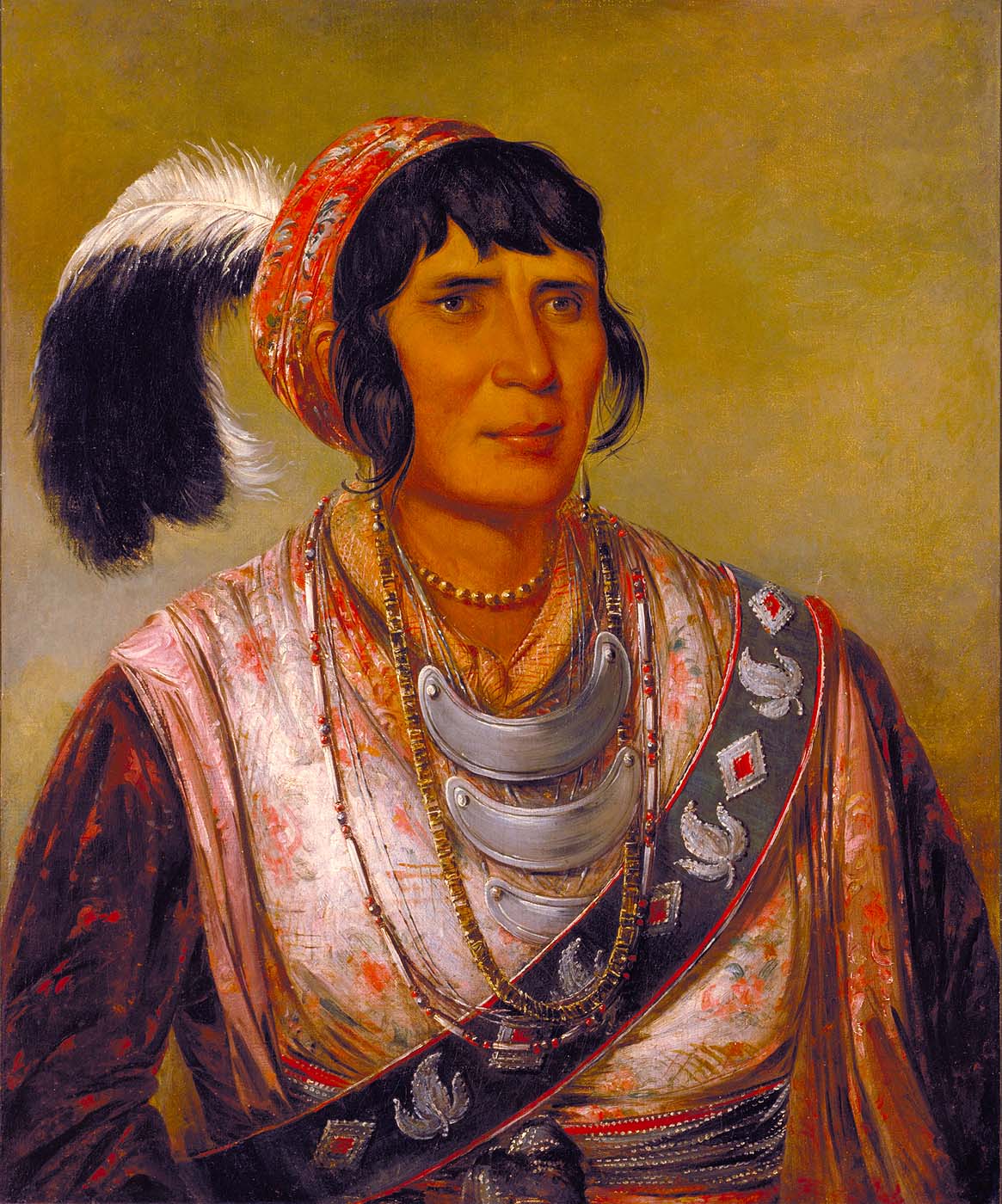
Sherman wrote about it afterward in his memoirs. [7] He was twenty-one years old, and what he learned at Fort Pierce was that a flag of truce was a tool, and that you could use one and keep your commission.
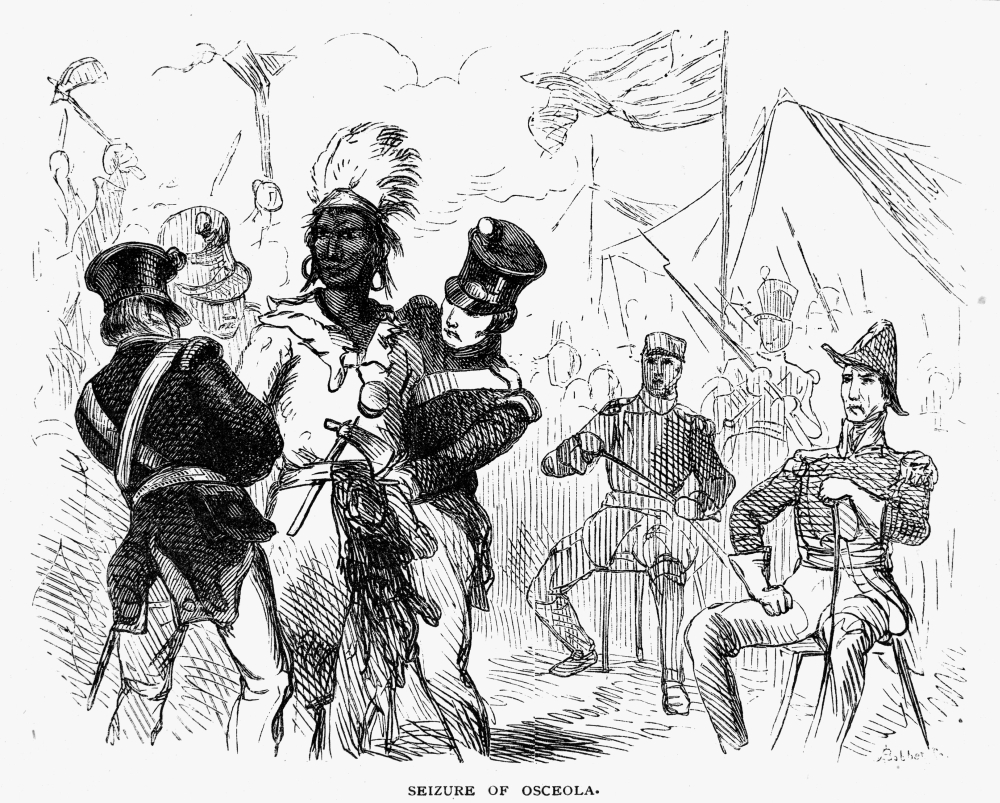
Hold that next to Part 1, where General Thomas Jesup seized Osceola under a white flag in 1837 and the country howled about it and nothing happened to Jesup either.
Braxton Bragg, the Quarrelsome Lieutenant
Braxton Bragg went to Florida with the 3rd Artillery and ended up commanding Fort Marion, near St. Augustine. [8]
He is the one everybody tells stories about, and the famous one is almost certainly not true.
Ulysses S. Grant put it in his memoirs. Bragg, serving as both company commander and post quartermaster, submitted a requisition to himself and refused it. He resubmitted with further reasons. He refused it again. Stuck, he took the matter to the post commandant, who is supposed to have said: “My God, Mr. Bragg, you have quarreled with every officer in the army, and now you are quarreling with yourself!” [8]
Grant passed the story along but admitted he had no idea whether it was true, and nobody else ever came forward to back it up. [8]
Here is the part that doesn’t need a punchline. At Fort Marion, Bragg overworked himself trying to improve his men’s living conditions, and he fired off a run of argumentative letters at the adjutant general and the Army paymaster. Those letters are what made his name. The word the Army attached to him was “disputatious.” [8]
He came by the reputation honestly, in Florida, before anyone had heard of him. Twenty-five years later it helped tear the Confederate Army of Tennessee apart from the inside.
And one more thing about Bragg, which matters later. In 1843 his regiment moved to Fort Moultrie in Charleston, and there he served alongside three future Union generals he counted as close friends. One of them was George H. Thomas. [8]
Joseph E. Johnston and the Thirty Bullet Holes
Joseph E. Johnston was not even a soldier when he went to Florida. He had resigned from the Army in March 1837 to study civil engineering, and he came down as a civilian topographic engineer. [2]
In January 1838, Navy Lieutenant Levin Powell took eighty men, fifty-five sailors and twenty-five soldiers, up the southwest fork of the Loxahatchee River from Jupiter Inlet. About three hundred Seminoles under Abiaka were waiting in a cypress swamp. [9]
Powell went down wounded. So did Lieutenants McArthur and Harrison. The surgeon, Frederick Leitner, was killed. The sailors, who had never done this, broke and ran. Four Americans died and twenty-two were wounded. [9]
With the officers on the ground, the civilian engineer took command. Johnston rallied the men and got them out in order, back to the boats, and away after dark for Fort Pierce. [9] [10]
He counted the cost afterward. By his own account there were “no less than 30 bullet holes” in his clothing, and one round had creased his scalp and left a scar he carried the rest of his life. [2]
The Florida historical marker at the site puts it plainly: “Only the leadership of Joseph Johnston prevented what could have been the ‘Powell Massacre.'” [11]
Nine days later Jesup brought fifteen hundred men to the same river, took a bullet across his own face, and afterward called the whole thing “productive of no results.” It was the last pitched battle of the Seminole Wars. [9]
Johnston had seen more fighting as a civilian in Florida than he ever had as an artillery officer, and it settled the question for him. He left for Washington that April, was commissioned a first lieutenant of topographic engineers on July 7, 1838, and was brevetted captain the same day for Jupiter Inlet and his work in the Everglades. [2]
The swamp made him a soldier.
Then the Civil War Split Them Apart
Thomas against Bragg. In September 1863 at Chickamauga, George Thomas held the Union left against Bragg’s attack while the rest of the line came apart. It is where he got his name. Twenty years earlier the two of them had been friends at Fort Moultrie. [8]
Sherman and Thomas against Bragg. That November at Missionary Ridge they drove Bragg off the heights above Chattanooga, and that was effectively the end of him as an army commander.
Johnston against Sherman. Johnston had already commanded the army that became the Army of Northern Virginia and been shot at Seven Pines in May 1862, which is how Robert E. Lee got the job. [1] By 1864 he was in front of Sherman in Georgia, and at Kennesaw Mountain in June he beat him. [1]
Johnston to Sherman. In April 1865, in North Carolina, Johnston surrendered 89,270 men to Sherman. It was the largest single surrender of the war, bigger than Appomattox. [1]
Two West Point roommates. Two friends from Fort Moultrie who met again at Chickamauga. A civilian engineer who found out in a cypress swamp that he could lead men. All of it learned in the same place.
Did Florida Teach Sherman to Burn?
Here is the part I keep coming back to.
Florida taught these men a particular kind of war. No front line. No decisive battle. An enemy you could rarely find, on ground that was killing your men faster than the enemy was. A government that wanted results and would not define them. And a strategy, once Jesup settled on it, of burning the crops and the villages until the families who depended on them could not go on. [3]
Sherman was a young lieutenant inside that strategy. Twenty-two years later he marched through Georgia.
He never said Florida taught him that. Nobody can prove it did. But he was there, and he saw it work, and it is hard not to wonder. I made a short video about exactly that question: The Swamp Where Sherman Learned to Burn.
One Last Walk in the Rain: Johnston at Sherman’s Funeral
After the war Sherman and Johnston became friends. Genuinely. Grant and Sherman both praised Johnston’s conduct in the war, and both men came to count him a friend afterward. [2]
So when Sherman died in February 1891, Johnston came north to carry him. An eighty-four-year-old Confederate, bareheaded in freezing rain, for the Union general who had burned his country’s heart out.
He caught pneumonia there and died a month later, on March 21, 1891. [1] [2]
Whatever those men learned in the Florida swamps, two of them came out of it with something else as well.
More on the men who fought that war: why Union soldiers really enlisted, and what ordinary soldiers believed they were fighting over.
Civil War Generals in the Seminole Wars FAQ
Which side did the Seminole War veterans fight on in the Civil War?
William T. Sherman, George H. Thomas, George Meade and Robert Anderson served in Florida for the Union side; Braxton Bragg, Joseph E. Johnston, William Hardee, John Pemberton and Jubal Early went on to fight for the Confederacy. The National Park Service describes the Second Seminole War as a training ground for the Army’s future senior officers. [3] [4] [5]
Were Sherman and George Thomas really roommates?
Yes. They graduated from West Point in 1840, roomed together there, and went into the same regiment. Both were sent to Florida, Sherman to Fort Pierce and Thomas to Fort Lauderdale. [4] [6]
What did Sherman do in the Seminole War?
He served at Fort Pierce on the Indian River from 1840 to 1842 as a young lieutenant, and in 1841 he helped bring in the Seminole war leader Coacoochee, whose party was then put in irons. [4]
Did Braxton Bragg really argue with himself?
Probably not. Grant included the story in his memoirs but admitted he could not vouch for it, and no one else ever confirmed it. What is documented is that Bragg’s argumentative letters to senior Army officials during his Florida service earned him a reputation as “disputatious.” [8]
Did Joseph E. Johnston really have thirty bullet holes in his clothes?
That is Johnston’s own account of the January 1838 fight near Jupiter Inlet. He said there were “no less than 30 bullet holes” in his clothing, and that a bullet creased his scalp and left a permanent scar. He was a civilian topographic engineer at the time, and he took command after the officers went down. [2] [9]
Did Joseph E. Johnston die because of Sherman’s funeral?
Effectively, yes. Johnston was a pallbearer at Sherman’s funeral in February 1891, contracted pneumonia there, and died on March 21, 1891. [1] [2]
How many men did Johnston surrender to Sherman?
89,270, in North Carolina in April 1865. It was the largest single surrender of the Civil War. [1]
Sources and Further Reading
- “Joseph E. Johnston,” American Battlefield Trust: battlefields.org
- “Joseph E. Johnston,” Wikipedia: en.wikipedia.org
- National Park Service, Dade Battlefield National Historic Landmark nomination: npgallery.nps.gov
- Town of Jupiter history, Seminole War officers: jupiter.fl.us
- Cooper Kirk, “Many Veterans of the Second Seminole War,” Broward Legacy: journals.flvc.org
- “George Henry Thomas,” Wikipedia: en.wikipedia.org
- W. T. Sherman, Memoirs of General W. T. Sherman, Vol. 1 (1875): gutenberg.org
- “Braxton Bragg,” Wikipedia, citing Ulysses S. Grant, Personal Memoirs: en.wikipedia.org
- “Battles of the Loxahatchee,” Wikipedia: en.wikipedia.org
- Palm Beach County Parks, Loxahatchee River Battlefield: discover.pbc.gov
- “Powell’s Battle / Second Battle of the Loxahatchee River,” Historical Marker Database: hmdb.org
- Jane F. Lancaster, “William Tecumseh Sherman’s Introduction to War, 1840–1842,” Florida Historical Quarterly 72 (1993): stars.library.ucf.edu