
Long before Vietnam, America fought another war it couldn’t win. It dragged on for years against an enemy the Army could barely find. It ran up a bill nobody wanted to pay, and newspapers turned the public against it. And it ended with no surrender, no treaty and no parade. The government simply announced it was over.
That war was fought in the swamps of Florida, against the Seminoles. Most Americans have never heard of it.
Here’s what makes the Seminole Wars different from most frontier wars. People at the time knew something was wrong. The first war embarrassed the United States in front of the world. The second embarrassed the Army in front of its own people. And the young officers who slogged through the Florida mud would meet again twenty years later, on opposite sides of the Civil War.
Dade’s Battle: How the Second Seminole War Began
December 28th, 1835. Central Florida. It’s cold and drizzling, and about a hundred and ten American soldiers are marching up a sandy military road from Fort Brooke, at Tampa Bay, toward Fort King, near present-day Ocala. Most of them have their heavy blue wool overcoats buttoned up against the weather.
Their commander, Major Francis Dade, thinks the worst is behind them. Six days on the road. They’re halfway there.
They’re being watched. Seminole warriors hidden in the palmettos and tall grass have shadowed the column every step of the way. A single rifle shot is the signal. The first volley drops Dade and about half his command. By nightfall, 108 of those roughly 110 men are dead or dying. One survivor, Private Ransom Clark, struggles about fifty miles back to Tampa with a bullet in his lung.
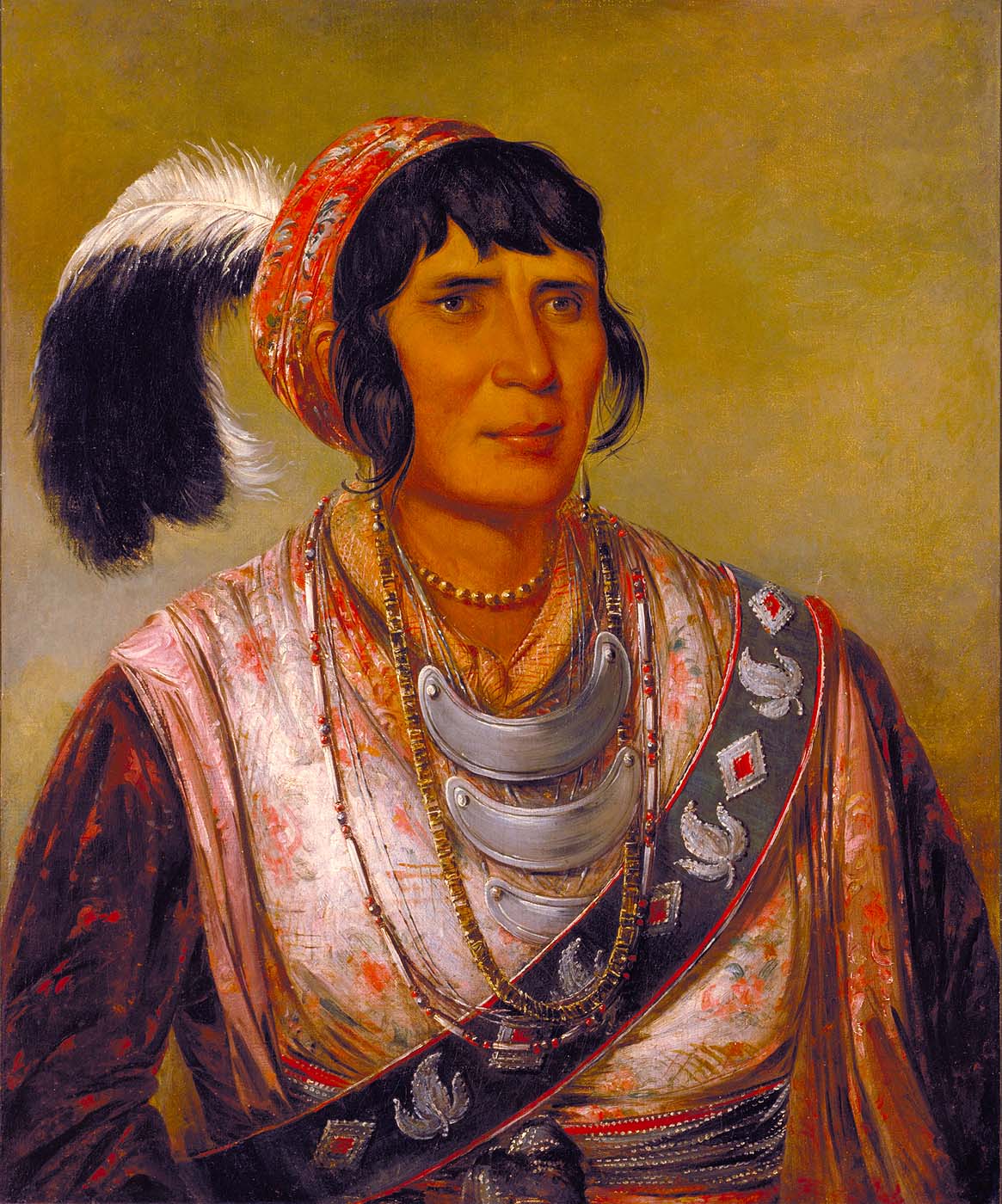
That same afternoon, about forty miles north, the Seminole leader Osceola shoots down the government’s Indian agent outside Fort King.
The Second Seminole War had begun. It would last seven years. It would kill more American soldiers than any other war the United States fought against a Native nation. And it would cost somewhere between fifteen and forty million dollars.
The Seminole Wars at a Glance
There were three Seminole Wars:
- The First Seminole War (1816–1819) ended with Spain handing Florida to the United States.
- Then came the Second Seminole War (1835–1842), the big one, a seven-year guerrilla war fought to force the Seminoles west.
- Finally, the Third Seminole War (1855–1858) was one last round of raids and skirmishes in southwest Florida.
The numbers from the second war tell the story. The regular Army lost 1,466 men, and only 328 of them died in combat. Fever, dysentery and the other diseases of the swamp killed the rest. The Army threw around ten thousand regulars and up to thirty thousand militia and volunteers at fewer than two thousand Seminole warriors. The regular Army nearly doubled in size just to fight this war.
By the end, the government had shipped about 3,800 Seminoles west to what’s now Oklahoma. Around 600 stayed, deep in the Everglades. Their descendants are still there. The Seminole Tribe of Florida calls itself “the Unconquered,” and they earned it.
What Caused the Seminole Wars? Slavery, Land and a Border Nobody Controlled
Strip it down and you get three things: slavery, land, and a border nobody could control.
The Seminoles were mostly Creek people who had moved south into Spanish Florida over the 1700s and early 1800s. Living alongside them, and allied with them, were free Black communities and people who had escaped slavery in Georgia and the Carolinas. Historians call them Black Seminoles.
So to slaveholders across the border, Florida was a hole in the fence. Georgia militias raided over the line for runaways, for land and for cattle.
The Negro Fort, 1816
The first real explosion, literally, came in 1816. During the War of 1812, the British had armed hundreds of formerly enslaved people and left them holding a fort on the Apalachicola River at a place called Prospect Bluff. Americans called it the “Negro Fort.” To Southern slaveholders it was a nightmare made real: an armed, free Black stronghold on their doorstep.
On July 27th, 1816, U.S. gunboats opened fire. A heated cannonball landed in the fort’s powder magazine, and the whole place went up. Somewhere around 270 to 300 men, women and children died in a single blast.
The next year, U.S. troops attacked the Seminole village of Fowltown over disputed land. The Seminoles answered by ambushing an Army supply boat on the Apalachicola and killing 43 people aboard. That gave Washington the excuse it needed, and it sent Andrew Jackson.
The First Seminole War: Andrew Jackson Invades Spanish Florida
In January 1818, before he had even set out, Andrew Jackson wrote a private letter to President James Monroe. The gist: just signal, through any channel, that you want the Floridas, “and in sixty days it will be accomplished.”
Read that again. An American general was offering to conquer a European power’s colony on a nod.
Monroe’s reply, which crossed Jackson’s letter in the mail, was conveniently vague. The Seminole campaign, he wrote, might bring Jackson “other services to perform.” Jackson later swore he got the go-ahead through a Tennessee congressman named John Rhea. Monroe, however, denied it until the day he died, and no such letter has ever turned up.
So, with no declaration of war, Jackson went. In April 1818 he marched into the Spanish fort at St. Marks, pulled down the Spanish flag and raised the Stars and Stripes. He told the Secretary of War he had taken it so it wouldn’t fall to “Indians and negroes.” In May he took Pensacola, the capital of Spanish West Florida. Yet the United States was not at war with Spain.
The Arbuthnot and Ambrister Affair
Then came the part that really blew up. At St. Marks, Jackson’s men captured two British subjects: an elderly Scottish trader named Alexander Arbuthnot and a young former Royal Marine named Robert Ambrister. Jackson put them before a military court on charges of helping the Seminoles. The court sentenced Arbuthnot to hang, but gave Ambrister a flogging instead of death. Jackson overruled his own court and had Ambrister shot anyway.
Spain was furious and demanded its forts back. Britain was angry as well. In January 1819 the House Military Affairs Committee issued a report condemning Jackson’s handling of the trials, and Congress spent weeks debating whether to censure him. Still, every resolution failed. Jackson was simply too popular.
Secretary of State John Quincy Adams cleaned up the mess and turned it into a win. With its colony indefensible, Spain sold Florida to the United States in the Adams–Onís Treaty of 1819. Privately, Adams complained he’d been left holding the bag for everything Jackson did.
The Road to the Second Seminole War: Indian Removal
Once Florida was American, the pressure shifted from the border to the land itself.
In 1823, the Treaty of Moultrie Creek pushed the Seminoles off the good farmland of north Florida and onto a reservation in the middle of the peninsula. Seven years later, in 1830, Jackson, now President, signed the Indian Removal Act. Two years after that, in 1832, a handful of Seminole chiefs signed the Treaty of Payne’s Landing, agreeing to move west within three years. Even some Army officers later admitted those chiefs had been pressured into it. A follow-up agreement signed out West in 1833, the Treaty of Fort Gibson, is one the Seminoles still regard as signed under duress.
Slavery was still at the center of it. If the Seminoles went west, the Black Seminoles living among them faced being claimed and re-enslaved. They had every reason to fight, and they did. In December 1836, General Thomas Jesup, who would command the war, put it bluntly in the language of his day: “This, you may be assured, is a negro, not an Indian war.”
The government’s agent, Wiley Thompson, set December 1st, 1835 as the deadline for the Seminoles to sell their cattle and prepare to leave. Four weeks later, Dade’s column was dead, and so was Thompson.
Osceola and the White Flag: The Seminole Wars’ Greatest Scandal
Newspapers turned a Seminole leader named Osceola into a legend. One popular story claimed he plunged his knife through the removal treaty. It probably never happened, but Americans were fascinated by him. That fascination is why what came next caused such an outcry.
By 1837, General Jesup was in command and under heavy pressure to show results. In June of that year, the Seminole chiefs met him in council. Jesup wrote to the Secretary of War that he could have seized them right there, but that doing so would teach “a lesson of barbarism.”
Four months later, he did exactly that.
“Seize Him and the Whole Party”
On October 20th, 1837, Osceola came in near Fort Peyton, just south of St. Augustine, for talks under a white flag. That same day Jesup sent a confidential order to the officer at the fort: “seize him and the whole party.” The next morning, General Joseph Hernández rode out to the Seminole camp. According to the Army’s own minutes, the chiefs told him, “We come for good.” They said they wanted peace. Hernández gave a prearranged signal, the troops closed in, and Osceola and about eighty of his people were taken prisoner without a shot.
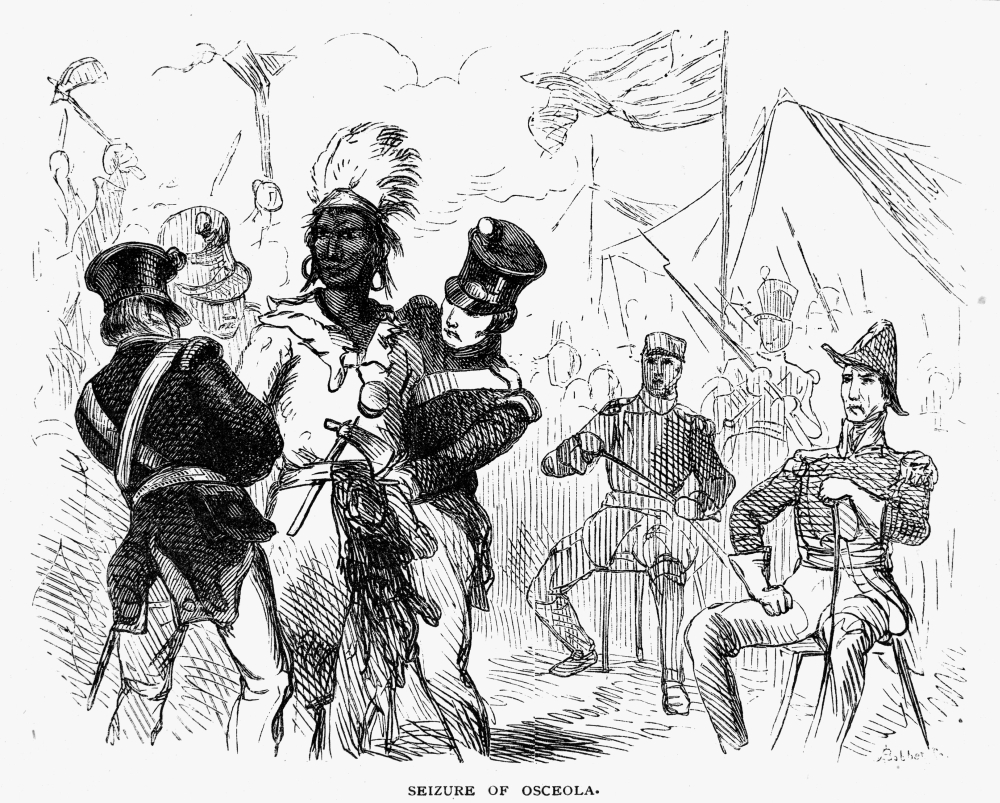
Some officers, in fact, saw it coming. Two days earlier, Army surgeon Samuel Forry had written that Jesup and his staff were “concocting some direful plans to entrap the poor savage.”
The Outcry Over the White Flag
The public reaction was brutal, and Congress demanded a report. When Jesup later seized another party that had come in under a Cherokee peace flag, the Cherokee chief John Ross protested it as an “unprecedented violation” of a rule every nation recognized. Osceola died in prison at Fort Moultrie, South Carolina, in January 1838, and he became a national martyr overnight.
A year later, Army surgeon Ellis Hughes rode past the spot where it happened. He wrote in his diary that he would give anything to escape Jesup’s reputation, and that the American banner was now “black with his foul stain.”
Afterward, Jesup spent the rest of his life defending himself. Twenty years later he told a Washington newspaper that the white cloth he had handed out was never a true flag of truce, and that he would “act as I acted then.”
Okeechobee, Cuban Bloodhounds and a Forty-Million-Dollar Bill
It didn’t stop there.
On Christmas Day 1837, Colonel Zachary Taylor attacked the Seminoles at Lake Okeechobee. His men charged across half a mile of sawgrass and knee-deep mud into prepared positions. Taylor lost somewhere between 26 and 28 soldiers killed and 112 wounded, while his men found only about a dozen Seminole bodies. Early newspaper reports called it a disaster. Yet Washington called it the greatest victory of the war and promoted Taylor.
Then, in early 1840, the Florida territorial government imported bloodhounds from Cuba to track the Seminoles, with Taylor’s approval. Naturally, cartoonists had a field day. One famous print shows dandified soldiers lounging in a tent while uniformed dogs stand guard for them. Abolitionists charged that the territory really wanted the dogs to hunt escaped slaves. Opponents were still throwing the bloodhounds at Taylor when he ran for President in 1848.
And the bill kept growing. By 1840, one cartoon put it at thirty million dollars, with no end in sight. Lieutenant Colonel Ethan Allen Hitchcock, a career Army officer, wrote in his diary that millions had been wasted out of pride, fighting a handful of people who had been badly wronged.
Why the Seminole Wars Were the Vietnam War of the 1800s
The comparison isn’t perfect, but it fits. Both were long guerrilla wars fought in terrain the Army didn’t understand, against an enemy who chose when and where to fight. Both had generals who promised victory, battles that were spun into triumphs, and a public that turned against the war through its newspapers. And both ended with the government declaring it was done rather than with a peace anyone could point to.
In August 1842, Colonel William Worth simply declared the Second Seminole War over. No treaty. No surrender. A few hundred Seminoles were still out in the Everglades.
The Third Seminole War (1855–1858)
The story doesn’t quite end in 1842.
Thirteen years later, surveyors and soldiers pushed into southwest Florida, into the town of a Seminole leader named Billy Bowlegs. The story goes that the soldiers cut down his prized banana plants. On December 20th, 1855, Bowlegs’ warriors hit back, and the Third Seminole War began. This time there were no big battles. Instead, it was raids, ambushes and patrols through the same swamps their fathers had fought in.
What finally broke it wasn’t a victory in the field. The Army began seizing Seminole women, children and elders and holding them in a blockhouse prison on Egmont Key, at the mouth of Tampa Bay. Then it sent word to the warriors: if you want to see your families again, come in. On May 7th, 1858, Billy Bowlegs and his followers surrendered at Fort Myers, and the Army shipped them west.
But an old medicine man named Abiaka, known to the Army as Sam Jones, never came in. He and a small band stayed hidden in the Everglades, and he died there, free. Their descendants are still in Florida today.
The Swamp Was Deadlier Than the War
Remember that number: 1,466 regular soldiers dead, and only 328 killed in battle. In fact, the real killer was Florida itself: five-foot sawgrass, fleas and chiggers even in winter, and malaria and yellow fever every summer. Among the lieutenants sweating through it all were William Tecumseh Sherman, Braxton Bragg, George H. Thomas, Joseph E. Johnston, George Meade, William Hardee and John Pemberton. Twenty years later, they turned what they learned on each other.
That’s the subject of Part 2 of the series, Surviving the Swamp.
If you want to see where those men ended up, start with Bleeding Kansas, where the fighting started before Fort Sumter, and why Union soldiers fought in their own words.
Seminole Wars FAQ
The Seminole Wars were three conflicts between the United States and the Seminole people of Florida, fought in 1816–1819, 1835–1842 and 1855–1858. They grew out of disputes over land, the removal of Native nations to the West, and slavery, since Florida had long been a refuge for people escaping it.
The Second Seminole War lasted seven years, cost an estimated fifteen to forty million dollars, and killed more American soldiers than any other war the U.S. fought against a Native nation. The regular Army lost 1,466 men, most of them to disease.
No one won cleanly. The United States took Florida and removed most Seminoles to the West, but the Second Seminole War ended without a treaty or surrender. Several hundred Seminoles stayed in Florida, and their descendants form today’s Seminole Tribe of Florida, which calls itself “the Unconquered.”
Osceola was seized on October 21st, 1837, near Fort Peyton, south of St. Augustine, while meeting U.S. officers for talks under a white flag. General Thomas Jesup had ordered the seizure in advance. The act caused a national outcry, and Osceola died in prison at Fort Moultrie in January 1838.
Both were long, unpopular guerrilla wars fought in difficult terrain against an elusive enemy. Both saw public opinion turn against them through the press, and both ended without a clear victory.
Future Union generals William T. Sherman, George H. Thomas, George Meade and Robert Anderson served in Florida, along with future Confederate generals Braxton Bragg, Joseph E. Johnston, Jubal Early, William Hardee and John Pemberton, among many others.
Seminole Wars Sources
- Seminole Nation Museum, “The Seminole Wars”: https://seminolenationmuseum.org/history-seminole-nation-the-seminole-wars/
- National Park Service, Dade Battlefield National Historic Landmark nomination: https://npgallery.nps.gov/NRHP/GetAsset/NHLS/72000353_text
- National Park Service, Negro Fort (Fort Gadsden) National Register nomination: https://npgallery.nps.gov/GetAsset/80271695-4e6a-473e-ab12-d5d0825e948a
- “First Seminole War,” Encyclopaedia Britannica: https://www.britannica.com/print/article/689068
- “How We Got Florida,” Florida Trend: https://www.floridatrend.com/article/15342/how-we-got-florida?page=2
- John Quincy Adams to John Adams, 14 February 1819, Founders Online: https://founders.archives.gov/documents/Adams/99-03-02-3622
- “The White Flag,” Florida Historical Quarterly 33 (1954): https://stars.library.ucf.edu/cgi/viewcontent.cgi?article=2547&context=fhq
- National Park Service, “Osceola”: https://www.nps.gov/people/osceola.htm
- Ellis Hughes Diary: Transcript, University of South Florida: https://digitalcommons.usf.edu/fl_manuscripts/3
- Florida State Parks, Okeechobee Battlefield history: https://www.floridastateparks.org/parks-and-trails/okeechobee-battlefield-historic-state-park/history
- “A bivouack in safety,” 1840 cartoon, Library of Congress: https://www.loc.gov/item/2008661353/
- Seminole Tribe of Florida THPO: https://stofthpo.com/seminole-history-landing-page/
- New England Historical Society, on Ethan Allen Hitchcock’s diary: https://newenglandhistoricalsociety.com/lt-col-ethan-allen-hitchcock-views-indians-part-great-human-family/
Images: George Catlin, Os-ce-o-lá, The Black Drink, a Warrior of Great Distinction (1838), Smithsonian American Art Museum; seizure of Osceola, wood engraving, 1837. Both public domain.