
Lincoln did not send 75000 men south to free slaves.
The reasons the federal government fought changed as the Civil War changed. The men doing the fighting changed too.
We’ll begin here.
Why Did Lincoln Call for 75,000 Troops in 1861?
After Fort Sumter surrendered on April 13, 1861, he issued a proclamation two days later calling for 75,000 state militia for ninety days to suppress the rebellion and enforce federal law. Within 90 days.[1]
The ninety days tells you something about expectations. Nobody yet understood what this thing was going to become.
Lincoln had been careful about slavery before the shooting started. In his First Inaugural Address, he repeated his position that he had no intention of interfering with slavery inside states where it already existed. More importantly, he said he did not believe he had the lawful authority to do it.[2]
His immediate problem in the spring of 1861 was secession.
Federal authority had collapsed across much of the Deep South. Federal property had been seized, and Confederate forces had organized openly against the United States.
Then came Fort Sumter.
By July, Lincoln laid out his case to Congress. He described a government whose authority had been pushed out of seceded states and whose property had been taken.[3]
Elections did not mean much if the losing side could simply leave whenever it lost.
That was the war Lincoln was publicly describing in 1861. The federal government was fighting to suppress rebellion, seize back it’s lands, and restore the Union.
It was not yet publicly fighting an abolitionist war.
How Lincoln’s Civil War Aims Began to Change
The problem with limited wars is that the other guy gets a vote.
The rebellion did not collapse in ninety days, and slavery did not politely stay outside the military situation.
In May 1861, three enslaved men escaped to Union-held Fort Monroe in Virginia. Their enslaver wanted them returned. General Benjamin Butler refused because the men had been used to support Confederate military work.
Other enslaved people began coming into Union lines. Before long the federal government had to figure out what the hell to do with thousands of people who were liberating themselves by walking toward its armies.[4]
This was no longer an abstract debate happening safely in Washington.
An army occupying Southern territory would encounter slavery, and enslaved people would encounter that army and run toward it. Their labor also helped sustain the Confederate war effort.
Those realities dragged slavery directly into Union military policy whether Lincoln wanted the question settled immediately or not.
Lincoln still moved cautiously.
When General John C. Frémont issued a broad emancipation order in Missouri in 1861, Lincoln revoked it. Missouri was a slave state that remained in the Union, and keeping loyal slave states from joining the Confederacy still mattered enormously.[5]
You have to remember that— At this point, only 7 Southern states had succeeded.
Saving the Union Starts to Mean Attacking Slavery
By the summer of 1862, Lincoln had already drafted a preliminary emancipation order.
Lincoln wrote that his “paramount object” was to save the Union. He said that what he did concerning slavery would depend on whether it helped accomplish that goal.[6]
It wasn’t until after Antietam, Lincoln issued the Preliminary Emancipation Proclamation. On January 1, 1863, the final proclamation declared enslaved people free in designated areas still in rebellion.
It did not abolish slavery throughout the United States, and it did not apply to the loyal slave states.
Delaware
Maryland
Kentucky
Missouri
You naughty boys thought you could get out of the shit slinging, that is the Civil War discussions?
Not today.
Lincoln justified emancipation through his authority as commander in chief and called it a “fit and necessary war measure.” The proclamation also opened federal military service to Black men.[7]
So— Let’s go!!
Why Did Ordinary Union Soldiers Fight?
This is where broad political explanations start getting messy.
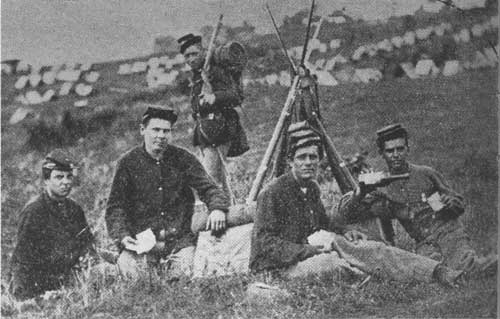
Like the Confederate video, we’re looking at poor corn shuckers. Non-commisioned soldiers, unrelated to prominence, the press, and non-abolitionists.
You may wonder why, no abolitionists— It’s because there is plenty of content about them.
We want middle of the road, average fellas.
And if you stick around to the end you’ll see they made up a small portion of the Union army.
So.
Some Northern men believed rebellion threatened their country. Others had much more personal reasons.
Those reasons could overlap, and they could change.
The best way to see that is not to grab one dramatic quotation from 1865 and pretend a soldier believed exactly the same thing in 1861.
We need to follow the same men while the war is actually happening.
That brings us to four of them.
Christian Isely: Union, Duty, and the Kansas-Missouri Border
Christian H. Isely is particularly interesting because he came out of the Kansas-Missouri border region, where political violence had been simmering long before Fort Sumter.
Isely was a Swiss immigrant and carpenter who eventually enlisted in Company F of the 2nd Kansas Cavalry. The published collection of his correspondence connects his decision to serve with his experience of the violence surrounding Bleeding Kansas.
I still want a cleaner surviving letter in which Isely himself makes that exact connection because I do not like turning an editor’s interpretation into a man’s own words.[10]
What we have from Isely himself is strong enough.
In May 1861, before his enlistment, he wrote directly to Lincoln that rebels were becoming more numerous and that “duty requires every true hearted citizen” to rally around the government.[11]
A few months later, Isely explained to his family why he remained in a region he considered endangered. Leaving would have made him feel like a coward for the rest of his life.
I love this.
An emigrant ready to earn his keep. Ready to fight and possibly die for a country he believes in.
His early language is overwhelmingly about Union and duty.
Then something interesting happens.
By February 1863, Isely was writing publicly against slavery. He argued that slavery was oppression and contrary to scripture. Preserving the Union still mattered, but slavery had clearly moved from a political problem around the edges of his thinking to something he believed ought to be destroyed.[11]
That is exactly the kind of evolution, I was looking for.
A man does not have to begin the Civil War as an abolitionist for slavery to become part of what victory eventually means to him.
Newton Scott: Fighting for the Union After the Romance Is Gone
Newton R. Scott gives us something different.
Scott was a private in Company A of the 36th Iowa Infantry. His surviving letters to Hannah Cone are especially useful because he was writing privately rather than preparing political arguments for strangers.
In October 1862, Scott wrote that he did not want to return home permanently until the “Wicked and God Forsaken Rebellion” had been destroyed. He added that the men were not in the army for fun or money.[12]
There is no grand philosophical argument there.
He thinks the rebellion needs to be beaten.
Then read him again in February 1864.
By this point the shine has come off soldiering. Scott still tells Hannah that it is the duty of able-bodied men to defend their country when necessary.
Then he basically says he has done his damn share.
Scott writes that three years is long enough for one man to serve while everybody else takes a turn. In the same letter he lashes out at Copperheads for staying home while worn-out soldiers remain in the field.[12]
A man can be tired of war without deciding the war was pointless.
Scott wanted to go home. He was angry and believed other men ought to shoulder the burden.
He also still wanted the rebellion defeated.
Later in 1864 he wrote that he expected Company A to vote overwhelmingly for Lincoln rather than McClellan.[12]
Scott had not become some starry-eyed crusader after years of service.
He sounds like a man who believed the job still needed doing and was sick to death of being one of the people doing it.
Thomas Christie: Patriotism Wasn’t the Only Reason Men Enlisted
Then there is Thomas Christie.
I like Christie because he prevents us from turning every Civil War enlistment into a political science dissertation.
Thomas and his brother William joined the 1st Minnesota Light Artillery. Their family correspondence runs through the war and gives us hundreds of pages of ordinary soldier life.[15]
Thomas explained himself pretty plainly to his father in October 1861.
Patriotism mattered, but he admitted that other motives were working on him too. He wanted to “see the world” and “make a man of myself.”
He also wanted to know later in life that he had taken part in the great struggle unfolding around him.[16]
There is something immediately recognizable in that.
This huge thing is happening. Your brother is involved. You are young, and your world has been pretty damn small.
So you go.
We sometimes seem uncomfortable admitting motives like that because they sound too ordinary for something as terrible as the Civil War.
But people are ordinary.
Thomas could believe the Union deserved defending while also wanting adventure.
Those things do not cancel each other out.
His letters also remind us of another problem with assigning one motivation to an entire army.
Men enlisted before they knew what four years of war would look like.
Nobody signing up in 1861 had the benefit of knowing 1865.
Benjamin Buckner: The Union Soldier Who Wanted Slavery Protected
I am going to break one of my own rules here.
For this study I deliberately went looking for enlisted men rather than officers. Generals, politicians, and educated officers left mountains of material behind, and they have a bad habit of becoming the voice of everybody standing underneath them. I wanted privates and ordinary working men whenever I could get them.
Benjamin Forsythe Buckner is the exception, because he shows just how broad the Union Army really was.
Buckner was a Kentucky lawyer, slaveholder, and major in the 20th Kentucky Volunteer Infantry. He was no abolitionist who happened to tolerate slavery for the sake of keeping Kentucky loyal. He believed slavery should continue, and that belief was actually part of the reason he opposed secession.
To Buckner and many other conservative Kentucky Unionists, breaking apart the United States was a terrible way to protect slavery. The Constitution and federal law already recognized slave property, while secession promised invasion, economic destruction, escaped slaves, and a war nobody could control. Historian Patrick Lewis found that Buckner believed slavery had a better chance of surviving inside the United States than inside a new Confederacy.[21]
So Buckner put on a United States uniform.
And he fought.
He served with the 20th Kentucky and saw combat, including at Shiloh. He could dislike Lincoln and still believe he was fighting for his country. In 1862 he reminded himself that he served a great government, not Abraham Lincoln personally.
The distinction worked until the government changed what the war was becoming.
As confiscation measures expanded and emancipation moved closer, Buckner became increasingly furious. He had joined an army he believed was defending the old constitutional Union. He had not volunteered to destroy slavery.
The Preliminary Emancipation Proclamation convinced him that those two things were no longer compatible.
Buckner was not alone inside his regiment. Seventeen officers from the 20th Kentucky eventually resigned their commissions as emancipation transformed federal war policy. Buckner resigned on April 17, 1863. He wrote that he could not continue fighting against his principles simply to satisfy what he considered an abolitionist faction in the North.[22]
That does not mean the 20th Kentucky collapsed. Most Kentucky Union soldiers remained in federal service despite whatever objections they had to emancipation. That contrast is important too. Men standing in the same army could watch the same government adopt the same policy and reach completely different conclusions about what they were willing to tolerate.
Buckner’s choice is especially interesting because he did not cross the lines and join the Confederacy.
He continued blaming secessionists for creating the disaster in the first place. In his mind, the Confederates had wrecked the country while Lincoln’s administration had transformed the Union into something he no longer recognized.
Buckner wanted something that was disappearing underneath his feet: the proslavery Union of 1861.
There is probably no better contrast with Wilbur Fisk.
Both men entered a Union war centered on restoring the country. As that war moved toward emancipation, Fisk increasingly accepted the destruction of slavery as part of defeating the rebellion.
Buckner went the other direction.
The same changing war that broadened Fisk’s understanding of what Union victory should mean drove Buckner out of the army altogether.
That is why I broke my rule for him.
If we reduce the Union Army to an army of abolitionists, Buckner makes no sense. If we reduce it to men who cared only about restoring the old Union, Fisk eventually stops making sense.
Both were there.
That messy middle is exactly what we are trying to understand.
What These Union Soldiers Tell Us Side by Side
Once these men are sitting next to each other, the idea of a single “Union soldier motive” starts falling apart.
That does not mean four men tell us what roughly two million Union servicemen believed.
They absolutely do not.
Four guys are just a glimse.
To find out whether those stories fit the wider army, we need to back away from them and look at a much bigger pile of letters.
James McPherson’s Study of Civil War Soldiers’ Letters
Historian James M. McPherson tried to do exactly that in For Cause and Comrades: Why Men Fought in the Civil War.
McPherson examined roughly 25,000 letters and 249 diaries written by 1,076 Civil War soldiers. His sample included 647 Union soldiers and 429 Confederates.[17]
It also gives us a useful warning about the word abolitionist.
McPherson discussed historian Bell Wiley’s earlier estimate that perhaps one Union soldier in ten had a genuine interest in emancipation for its own sake. McPherson suggested that even ten percent may have been too high if we mean soldiers who entered the war primarily committed to abolishing slavery.[18]
So if the question is:
How many Union soldiers marched off in 1861 mainly because they wanted to free enslaved people?
The evidence suggests they were a small minority.
Now change the question.
How many Union soldiers came to believe that slavery had to be destroyed if the Union was going to survive?
That number gets considerably larger.
During roughly the first eighteen months of the war, about three in ten Union soldiers in McPherson’s sample expressed the idea that emancipation and preservation of the Union had become connected.[18]
A man did not have to enlist as an abolitionist to eventually conclude that the rebellion could not be crushed while leaving slavery untouched.
By the spring of 1863, McPherson found that 36 percent of his Union sample had explicitly supported emancipation as a war aim while 16 percent explicitly opposed it. The rest had left no clear surviving statement on the issue.[19]
Among enlisted men specifically, explicit support was about one-third.
Then we get a rare contemporary poll that makes the argument a little less abstract.
In March 1863, the 15th Iowa polled its soldiers on the Emancipation Proclamation. Roughly half supported it while about one quarter opposed it. The remaining quarter expressed no opinion.
McPherson warns that even this needs caution because the regiment’s colonel supported emancipation and the vote was open rather than secret.[19]
Again, people were arguing about this stuff in camp.
They were not a single ideological blob.
So What Did Union Soldiers Actually Fight For?
There is a temptation to finish an article like this with a nice clean answer.
I do not think the evidence gives us one.
Lincoln did not call for 75,000 men in April 1861 by announcing a war to abolish slavery. He called them because armed secession had challenged federal authority and the continued existence of the Union.
Then the war changed.
Enslaved people entered Union lines and forced federal commanders to deal with slavery on the ground. Lincoln increasingly concluded that attacking slavery could weaken the Confederacy, while Black military service could strengthen the Union.
By 1863, emancipation was federal war policy.
The soldiers were changing too.
Some men continued to define the whole thing primarily as a war for the Union. Others came to believe that there could be no lasting Union while slavery survived in the form that had helped produce the rebellion.
Some men were racist and supported emancipation anyway. Others opposed emancipation but continued fighting.
A man could also simply be twenty years old, patriotic enough, and curious about the world beyond his farm.
That is the part I think gets lost when we ask what “the Union soldier” believed.
There was no Union soldier.
There were hundreds of thousands of them, writing home from muddy camps while the meaning of the war shifted underneath their feet.
The better question is not simply what they fought for.
It is what they believed they were fighting for when they enlisted, and what they believed after the war had shown them what it actually was.
That answer changed as the war went on.
So did they.
Sources
Abraham Lincoln, “Proclamation Calling Militia and Convening Congress,” April 15, 1861. Library of Congress. https://www.loc.gov/item/mal0907400/
Abraham Lincoln, First Inaugural Address, March 4, 1861. Library of Congress. https://www.loc.gov/resource/mal.0773800/
Abraham Lincoln, Special Message to Congress, July 4, 1861. The American Presidency Project. https://www.presidency.ucsb.edu/documents/special-session-message-5
National Park Service, “Living Contraband: Former Slaves in the Nation’s Capital During the Civil War.” https://www.nps.gov/articles/living-contraband-former-slaves-in-the-nation-s-capital-during-the-civil-war.htm
National Park Service, “Fort Monroe and the Contrabands of War.” https://www.nps.gov/articles/fort-monroe-and-the-contrabands-of-war.htm
Abraham Lincoln to Horace Greeley, August 22, 1862. Library of Congress. https://www.loc.gov/resource/mal.4233400/
National Archives, “Emancipation Proclamation.” https://www.archives.gov/milestone-documents/emancipation-proclamation
Abraham Lincoln to James C. Conkling, August 26, 1863. The American Presidency Project. https://www.presidency.ucsb.edu/documents/letter-james-c-conkling
Abraham Lincoln, Second Inaugural Address, March 4, 1865. Library of Congress. https://www.loc.gov/resource/mal.4361300/
Ken Spurgeon, A Kansas Soldier at War: The Civil War Letters of Christian & Elise Dubach Isely.
Christian H. Isely correspondence, Isely Family Papers, Wichita State University Special Collections / Community and Conflict. https://ozarkscivilwar.org/archives/3942
Newton Scott Letters, 36th Iowa Infantry, National Park Service. https://www.nps.gov/stri/learn/historyculture/upload/Newton_Scott_Letters_Trasncription_508.pdf
Wilbur Fisk, Hard Marching Every Day: The Civil War Letters of Private Wilbur Fisk, 1861–1865, ed. Emil and Ruth Rosenblatt. University Press of Kansas.
Wilbur Fisk letters, 1862–1864; Gary W. Gallagher, The Union War.
Minnesota Historical Society, Christie Family Civil War Letters. https://mnhs.gitlab.io/archive/christie/www.mnhs.org/library/christie/intropage.html
Hampton Smith, ed., Brother of Mine: The Civil War Letters of Thomas and William Christie.
James M. McPherson, For Cause and Comrades: Why Men Fought in the Civil War. Oxford University Press, 1997.
McPherson, For Cause and Comrades, pp. 117–118.
McPherson, For Cause and Comrades, discussion of Union soldiers and emancipation, including the 15th Iowa poll.
McPherson, For Cause and Comrades, discussion of Confederate soldiers, slavery, and wartime motivations.
Patrick A. Lewis, For Slavery and Union: Benjamin Buckner and Kentucky Loyalties in the Civil War. University Press of Kentucky, 2015.
Patrick A. Lewis, “‘All Men of Decency Ought to Quit the Army’: Benjamin F. Buckner, Manhood, and Proslavery Unionism in Kentucky,” Register of the Kentucky Historical Society, Vol. 107, No. 4 (2009); Civil War Governors of Kentucky, Benjamin F. Buckner biographical entry.