

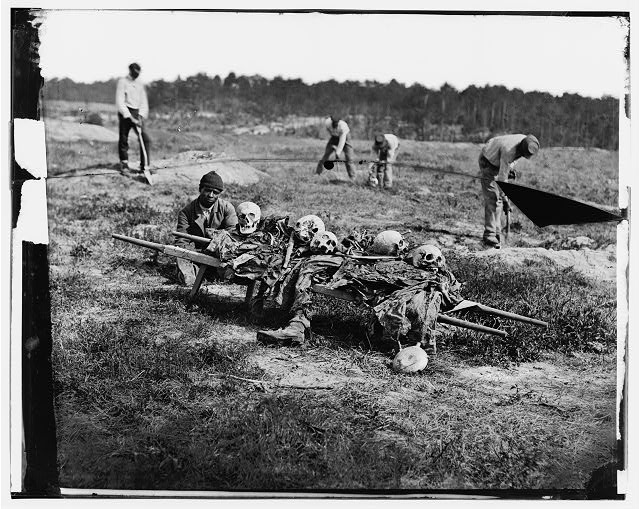
When the American Civil War—or any human conflict—is brought up, people run to their proverbial guns and prepare for a fight in the comment section.
And that tribal mentality misses a crucial reason why we study history.
First off, taking a modern moral sledgehammer to the long dead is moot.
What does that do for anyone besides make us feel we’re of higher moral standing because we weren’t what they were?
Defending them blindly is a branch off that same tree.
We like to say history repeats itself because we never learn from it. Well, this kind of thinking is part of the reason why.
Understanding History Means Asking Why
Look at how we judge people today.
In the American justice system, we consider a person’s upbringing, the world they grew up in, their circumstances, their status in life, and increasingly what psychology can tell us about human behavior.
None of that means excusing what they did.
Understanding is not cheering. It is not declaring their actions just.
It is asking why.
And we should always ask why.
That is where we can begin pulling the thing apart and seeing how it happened. What pressures were at work. What ideas took hold. The experiences that hardened somebody. What path led an ordinary human being to a decision that, from the safety of another century, might look unthinkable.
Claiming with certainty that you would have behaved differently under the same pressures, in the same time, with the same upbringing and circumstances, is mostly arrogant self-flattery.
After all, we are working with the same basic human machinery.
You can be intelligent. Educated. Convinced you are morally upright.
And still be capable of terrible things.
Some people know exactly what they are doing and simply do not care. Others convince themselves that what they are doing is necessary, righteous, defensive, or even good.
That is precisely why the psychology matters.
History and Human Psychology
To analyze history is, in part, to analyze the human mind.
Simply fighting over which tribe deserves condemnation or defense can drag us right back into the primitive tribalism that history should be helping us recognize.
These are flaws in our wiring worth understanding, because understanding them gives us at least a chance of recognizing them when they appear again.
A look inside history is also a look inside ourselves.