
![Cudjo Lewis (Oluale Kossola), survivor of the Clotilda, the last slave ship to America, photographed around 1914]](https://clayboone.com/wp-content/uploads/2026/10/Cudjo_Lewis_photo_1914_Roche.jpg "Cudjo_Lewis_photo,_1914_(Roche)")
When the topic of slavery comes up, someone in the comments always mentions that Africans sold their own people first. There usually isn’t much more that comes of it besides finger pointing. But what is the truth behind it? The answer runs through one West African kingdom: Dahomey.
Cudjo Lewis and the Clotilda, the last slave ship to America
We’ll begin with Cudjo Lewis. Zora Neale Hurston interviewed him in 1927, and his story finally came out as the book Barracoon in 2018. [1]
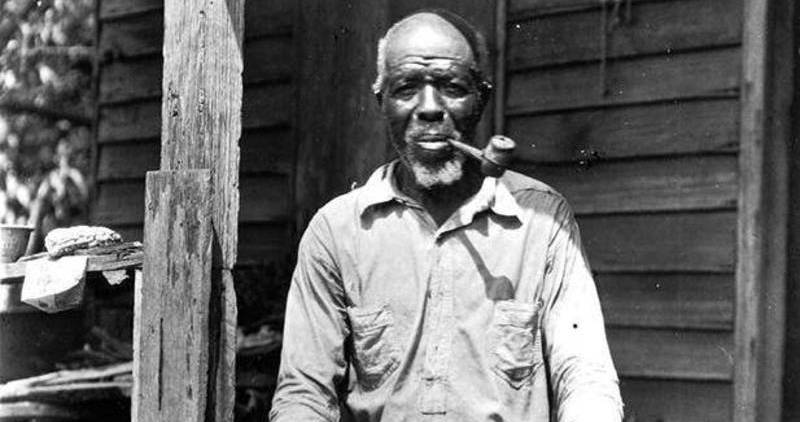
Cudjo Lewis, born Oluale Kossola, around 1914. Captured in a Dahomey raid in 1860, he was brought to Alabama on the Clotilda and later helped found Africatown. Photo: Emma Langdon Roche, Historic Sketches of the South (1914). Public domain.
Cudjo hadn’t always been his name. He was still called Oluale Kossola when he arrived in Mobile Bay, Alabama, in 1860. Under cover of night, a schooner called the Clotilda slipped into the bay with 110 Africans in its hold. [2][3]
Bringing enslaved people into the United States had been illegal for 52 years. [2] Nobody aboard cared. A Mobile businessman named Timothy Meaher had reportedly bet he could sneak a shipload of Africans right past the authorities. [4] He won.
The captives were moved onto a riverboat. The Clotilda was burned and sunk to hide the evidence. [5]
Three months earlier, Kossola had been training as a warrior in his hometown in what is now Benin. Then an army came. It killed the town’s king and many of its people, and took the rest prisoner. [2] Kossola was marched to the capital of the kingdom that attacked him, then down to the coast, where he sat in a slave pen for three weeks waiting on a ship. [2]
The army that took him was African. The kingdom was Dahomey.
How the Kingdom of Dahomey fought its way into the slave trade
Dahomey sat in what is now southern Benin, on an inland plateau around its capital, Abomey. [6] For its first century or so, it was a landlocked kingdom watching its coastal neighbors get rich selling people to Europeans.
Dahomey didn’t stumble into the slave trade. It fought its way to the beach to get a bigger piece of it. Between 1724 and 1727, Dahomey conquered Allada and Whydah, the two trading kingdoms between it and the sea. [7] It now had its own door to the Atlantic.
Britannica describes a state organized for war, both to grow its borders and to take captives. [6] Those captives went one of three ways. Some were sold to Europeans for guns and goods. Some were kept to work the royal plantations that fed the army and the court. [6] And some were sacrificed at the Annual Customs, which we’ll get to.
How many people did Dahomey sell through Ouidah?
Historian Robin Law, who wrote the book on Ouidah, counts more than a million people shipped out of that one port. Only Luanda, in Angola, sent more captives across the Atlantic. [8][9] Ouidah was already a slave port before Dahomey took it, and it kept selling people into the 1860s. [9]
Where did Dahomey’s slaves go? Mostly not to the United States
Here’s something most Americans get wrong. The people sold through Dahomey’s ports mostly didn’t come here.
About two of every ten people shipped from the Bight of Benin, Dahomey’s stretch of coast, went to French Saint-Domingue, today’s Haiti. Most of the rest went to Bahia, in Brazil. [10] More than 90 percent of the Africans who landed in Bahia came either from the Bight of Benin or from Central Africa. [11] All of North America, by comparison, took in about 400,000 people from the entire Atlantic trade. The Caribbean took in about 4.1 million. [12]
So the Clotilda isn’t the typical Dahomey story. It’s the exception that ties Dahomey straight to American soil.
That’s also why Dahomey’s religion shows up loudest in Haiti and Brazil. The Fon word vodun means a god or spirit, and it’s the root of Haitian Vodou. [13] Agassou, the leopard-born ancestor of Dahomey’s kings, is still honored as a spirit in Haitian Vodou today. [14]
Cudjo Lewis’s story: Dahomey’s raid on Bantè
Kossola told his story to Zora Neale Hurston over three months in 1928. [1] Here’s what he described, in my words, not his.
It started with a demand. Three men from Dahomey came to his town’s market and asked to speak with his king, Akia’on. Dahomey wanted corn and cattle. [1][15] Kossola’s king refused. He said that if Dahomey’s king spent less time sending soldiers to hunt slaves, he’d have time to farm his own land. [15] The introduction to Barracoon says King Glele of Dahomey used the refusal as his excuse to sack the town. [1]
The Dahomeans hit before dawn. Kossola woke up to soldiers with French guns pouring into the town, and to Dahomey’s women soldiers catching people and cutting off their heads with big knives. [1][15] Old people who tried to run were killed at their doors. [15] Kossola ran from gate to gate. Every one was blocked, and at the last gate the soldiers tied his wrists. [15]
They brought his king out to the king of Dahomey, who was waiting in the bush outside town. At a signal, a soldier cut off the king’s head. [15]
The march to Abomey
Then came the march. Kossola and the other young captives were tied in a line and walked toward Dahomey with their relatives’ heads hanging from the soldiers’ belts. When the heads started to rot, the army stopped and smoked them over a fire to keep them. [15][16] In the Dahomean towns along the way, he saw fresh heads raised on poles over the huts. [16]
Heads like these ended up on display across Dahomey. Kossola watched it happen to his own people.
From there he was taken to Ouidah and held in a barracoon, a slave pen, until the Clotilda came. [2]
What follows is from my novel, [BOOK TITLE]. It’s fiction, but every image in it comes from the record you just read.
But when he blinked, it was Africa burning again.
Not his Africa.
Theirs.
Dahomey men had come before dawn with guns, blades, and rope.
Black men taking Black men.
That had been the first lesson the world taught him plain: misery did not wear one skin to wield a master’s hand.
Smoke filled his mouth.
His wrists were tied.
His neck was raw from the rope that joined him to the others.
Men who had been proud at sunrise walked like cattle by dusk. Women cried behind him. Somewhere ahead, drums spoke from the road to Abomey.
They brought him through walls crowned with skulls.
He remembered that most.
Not the shouting.
Not the blood on his feet.
The skulls.
Pale faces with hollows for eyes staring down from places of honor, as if the dead themselves had been made into brick and warning.
The stones were dark with old sacrifice. The air smelled of palm oil, iron, blood, and smoke.
Men prayed and killed there.
Called it holy.
He had prayed then too.
To anything.
Anyone who’d listen.
Like a boy hiding beneath his own ribs.
Only silence.
Then, in the red dark beyond the drums, something turned its face toward him.
The god that answered was not merciful.
But it answered.
Human sacrifice and skulls in Dahomey’s Annual Customs
The Fon name for the Annual Customs, xwetanu, translates literally as “yearly head business.” [17] The ceremonies took shape under King Agaja around 1730. They mixed tribute and gift-giving, military parades, a great council that debated national policy, and the killing of war captives and criminals for the dead kings. [17] Most victims were beheaded. [17] Robin Law wrote a whole study on what beheading meant politically and religiously in Dahomey. [18]
The idea was that the dead kings needed servants and messengers in the afterlife. So the living king sent them. And when a king died, the killing was far bigger: the Grand Customs. [19]
The heads didn’t just get buried. A lot of them went on display.
- Palaces and temples. The 1842 and 1860 editions of the Encyclopaedia Britannica both told readers that human skulls were the favorite decoration on Dahomey’s palaces and temples. [20]
- Around the palace walls. Reviewing Frederick Forbes’s book in 1851, The Spectator noted the skulls surrounding the king’s palaces and showing up in Dahomean heraldry. [21]
- On the battle flags. Forbes saw a human skull mounted on each of the royal war standards at Abomey. [22]
- As drinking cups. The skulls of conquered kings were turned into royal drinking cups, and the Dahomeans counted that as an honor to the dead king. [23]
Why skulls?
Why skulls? A head taken in war belonged to the king, and so did the head of every man in his army. Britannica’s old Dahomey entry repeats a story from the slave trader Robert Norris, who asked a Dahomean soldier whether he feared the enemy. The soldier answered: “my head belongs to the king, not to myself.” [20] Robin Law took that line as the title of his study of what beheading meant to the Dahomean state. [18]
One caveat: every one of these descriptions comes from European outsiders, and the encyclopedia was repeating older travelers’ accounts. The skulls were real. The tone was written for readers who already saw Dahomey as a horror show.
The Tree of Forgetfulness in Ouidah: memory, not record
If you walk the Slave Route in Ouidah today, you’ll pass a memorial to the Tree of Forgetfulness. According to oral tradition, captives were forced to walk around it, men nine times and women seven, so they’d forget their families and their homeland before boarding the ships. [24] Local tradition says it was planted in 1727, the year Agaja took the town. [24] The tree is gone now. A monument marks the spot. [24]
There’s a twist in some versions. The tree was believed to hold on to those memories, so the captives could find them again if they ever came back. [24]
The kingdom behind the Clotilda, the last slave ship to America
So let’s add it up.
Dahomey fought its way to the coast so it could sell people. More than a million went out through Ouidah alone, most of them to Brazil and Haiti. Its kings sent captives to serve their dead ancestors: dozens a year, hundreds when a king died. [19] Not the thousands the propaganda claimed, but not nothing either. [25]
When Britain closed the door on the trade, Dahomey kept its slaves and changed its product. [6] One king, Gezo, tried to scale the whole system back. His son, Glele, turned it around. [26] And in 1860, Glele’s kingdom sold 110 people to a ship from Alabama. [27]
France conquered Dahomey, and its last king, Béhanzin, was gone from power by 1894. [28] Cudjo Lewis outlived the kingdom that sold him by more than forty years. [2]
Africatown is still there.
Did Africans sell Africans? Dahomey was the tip of the iceberg
Here’s the last thing I want you to walk away with. Dahomey wasn’t the worst. It was the best documented. (For the American side of this story, read my piece on Black Masters and Black Confederates.)
Dahomey was one of several West African kingdoms that raided for captives and killed people in royal rituals. What made it famous wasn’t the amount of blood. It was the amount of ink.
Dahomey and its neighbors on the Bight of Benin shipped only about 16 percent of the captives taken from the continent. [29]
Its neighbors did it too
Asante (modern Ghana). In the 19th century, Asante was notorious for the number and cruelty of the human sacrifices in its capital, Kumasi. [30] The British envoy Thomas Bowdich, who visited in 1817, reported that about a hundred people, mostly condemned prisoners, were usually killed at the annual Yam Custom, on top of slaves killed by individual chiefs. [31] Historians still argue over how much of it was religious sacrifice and how much was capital punishment, the same debate that hangs over Dahomey. [32]
Benin (modern Nigeria, not the country of Benin). When the British sacked Benin City in 1897, officers wrote up sacrifice compounds and altars covered in dried blood. [33] The British press leaned on those stories to justify the attack, which also happened to grab Benin’s palm oil trade and the famous Benin Bronzes. [34]
Why Dahomey became the poster child
Colonial fascination.
It had the women warriors. Europeans called them “Amazons,” after the Greek myth. They called themselves ahosi, “the king’s wives,” or Mino, “our mothers.” [35] By the 19th century they numbered somewhere between 1,000 and 6,000. [36] Nothing grabbed a European reader like an army of women, and it still works: the 2022 movie The Woman King is about them.
It put its rituals on display. Dahomey’s kings invited foreign envoys to watch the Customs in person. Forbes sat through them in 1849 and 1850. [22] Richard Burton attended as Britain’s official envoy in 1863 and 1864. [25][19] Few other kingdoms’ rituals were watched and written up by so many European visitors. Dahomey’s had eyewitnesses taking notes.
Frequently asked questions about Dahomey and the slave trade
Did Africans sell other Africans into slavery?
Yes. Kingdoms like Dahomey raided their neighbors and sold captives to European traders. But Dahomey and its Bight of Benin neighbors shipped only about 16 percent of the captives in the Atlantic trade, and the trade ran on European demand.
Who was Cudjo Lewis?
Cudjo Lewis, born Oluale Kossola, was captured in a Dahomey raid in 1860 and brought to Alabama on the Clotilda, the last known slave ship to the United States. Zora Neale Hurston recorded his story in Barracoon.
Where did Dahomey’s captives go?
Mostly to Brazil and Haiti. Very few came to the United States.
What were the Annual Customs of Dahomey?
Yearly royal ceremonies that included tribute, military parades, a national council, and the beheading of war captives and criminals to serve the dead kings.
Were the Dahomey Amazons real?
Yes. Dahomey had an army of women soldiers, called ahosi or Mino, numbering between 1,000 and 6,000 in the 19th century. They inspired the 2022 movie The Woman King.
Related reading: Black Masters and Black Confederates: The Truth, the Myth, and the Lies · The Seminole Wars
References
- Zora Neale Hurston, Barracoon: The Story of the Last “Black Cargo,” ed. Deborah G. Plant (Amistad, 2018), introduction.
- “Cudjo Lewis,” Encyclopedia of Alabama. Link
- “Clotilda,” Encyclopedia of Alabama. Link
- Sylviane A. Diouf, Dreams of Africa in Alabama: The Slave Ship Clotilda and the Story of the Last Africans Brought to America (Oxford University Press, 2007). Author page
- “Clotilda (slave ship),” Wikipedia. Link
- “Dahomey,” Britannica. Link
- “Agaja,” Wikipedia. Link
- Robin Law, Ouidah: The Social History of a West African Slaving “Port,” 1727–1892 (Ohio University Press / James Currey, 2004). Publisher page
- “Ouidah,” Slavery and Remembrance, Colonial Williamsburg Foundation. Link
- “The Nago,” Marronnage in Saint-Domingue, Duke University. Link
- “Salvador da Bahia, Brazil,” Slavery and Remembrance. Link
- “Fon people,” Wikipedia (Atlantic trade embarkation and disembarkation table). Link
- “Vodou,” Encyclopaedia Britannica, as quoted in “A Walk Along the Slave Route,” Awake!, May 2011. Link
- “Agassou,” Wikipedia. Link
- “Barracoon: Chapter 5 Summary & Analysis,” LitCharts (summary of Kossola’s account in Hurston, Barracoon). Link
- Zora Neale Hurston, “The Last Slave Ship,” American Mercury (1944), Faded Page edition. Link
- “Annual Customs of Dahomey,” Wikipedia. Link
- Robin Law, “‘My Head Belongs to the King’: On the Political and Ritual Significance of Decapitation in Pre-Colonial Dahomey,” Journal of African History. Link
- Thomas Wright, The Life of Sir Richard Burton (1906), ch. 12. Link
- “Dahomey,” Encyclopaedia Britannica, 7th ed. (1842) and 8th ed. (1860). 1842; 1860
- Review of F. E. Forbes, Dahomey and the Dahomans, The Spectator, 8 March 1851, p. 15. Link
- Frederick E. Forbes, Dahomey and the Dahomans (London, 1851), vol. 1, pp. 73–77, as quoted by the Library Company of Philadelphia. Gezo portrait; Court reception
- “Kingdom of Dahomey,” GlobalSecurity.org (quoting Burton, 1864). Link
- “Tree of Oblivion: UNESCO Slave Route Step 2, Ouidah,” Black Atlantic Revisited, Africa Multiple Cluster, University of Bayreuth. Link; Station 6
- Richard F. Burton, A Mission to Gelele, King of Dahome (London, 1864), vol. 1. Project Gutenberg
- Robin Law, “The Politics of Commercial Transition: Factional Conflict in Dahomey in the Context of the Ending of the Atlantic Slave Trade,” Journal of African History 38, no. 2 (1997): 213–233. Link
- “Glele,” Wikipedia. Link
- “Béhanzin,” Wikipedia. Link
- David Eltis and David Richardson, Atlas of the Transatlantic Slave Trade, 2nd ed. (Yale University Press, 2015), Map 9, as tabulated in “Fon people,” Wikipedia. Link; see also the SlaveVoyages estimates database. Link
- Emmanuel Terray, “Le pouvoir, le sang et la mort dans le royaume asante au XIXe siècle,” Cahiers d’Études Africaines 34, no. 136 (1994): 549–561. Abstract
- “The Asante,” I Speak of Africa exhibition, King’s College London (on Thomas Bowdich, Mission from Cape Coast Castle to Ashantee, 1819). Link
- Clifford Williams, “Asante: Human Sacrifice or Capital Punishment?” and Ivor Wilks’s rejoinder, International Journal of African Historical Studies 21, no. 3 (1988). Record
- Reginald Bacon, Benin: The City of Blood (1897), officers’ reports as excerpted in “1899: Ologbosere, of the Benin Empire,” Executed Today. Link
- Tony Phillips, “British Punitive Expedition 1897,” Victoria and Albert Museum catalogue entry. Link
- “Dahomey Amazons,” Wikipedia. Link
- “Who Were the Dahomey Amazons?” History (UK). Link